
Physics Newsletter September #1
- Bhavya Goel
- Sep 9, 2024
- 5 min read
Physics Pulse: Physics Newsletter
By: Bhavya Goel - Researcher
INTRODUCTION
Hi all , this is our third newsletter. Read out the latest news and breakthroughs in the field of physics , written in an easy to understand manner. Let us know your opinions on this week’s newsletter and in the comments tell what topics you want to see more in our newsletters. Here are some examples: Space , Matter , Quantum Theory and much more.

Webb Telescope Finds Six Rogue Worlds, Including Lightest with Dusty Disk
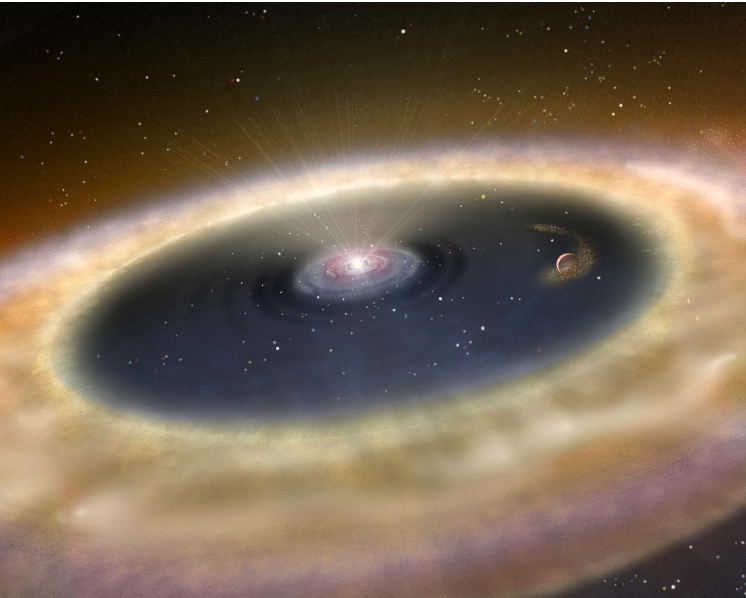
Astronomers have discovered that the same processes that create stars might also be responsible for forming objects just slightly bigger than Jupiter. This new evidence comes from a detailed survey of the young star cluster NGC1333, located about a thousand light-years away in the Perseus constellation.
The study, led by Adam Langeveld, an astrophysicist at Johns Hopkins University, used the Webb Space Telescope to find gas giants that are 5-10 times more massive than Jupiter. These objects are among the smallest ever found that formed in a way similar to stars.
The research revealed that no objects lighter than five Jupiter masses were detected, suggesting that lighter objects might form more like planets than stars. This discovery shows that nature can create planetary-mass objects in two ways: from a collapsing cloud of gas and dust (like stars) or in disks around young stars (like planets).
Disks, in this context, are flat, rotating layers of gas and dust surrounding a newly forming star or object. These disks are essential for the formation of planets as the material within them clumps together to eventually form larger bodies.
One of the most interesting finds is a starless object with a mass of five Jupiters, which likely formed like a star. It has a dusty disk, which is essential for planet formation, suggesting that even these tiny objects could potentially form their own mini planetary systems.
The study also discovered a new brown dwarf with a companion the size of a planet, challenging existing theories about how binary systems form.
These findings blur the lines between stars, brown dwarfs, and gas giants, showing that the universe is more diverse and complex than we previously thought. The research team plans to continue studying these objects to learn more about how they form and evolve.
A method that paves the way for improved fuel cell vehicles

Researchers at Chalmers University of Technology in Sweden have developed a new method to better understand how fuel cells degrade over time, which is key to improving their lifespan and making hydrogen-powered heavy-duty vehicles a viable alternative to traditional combustion engines.
Hydrogen-powered vehicles emit only water vapour, and if the hydrogen is produced using renewable energy, they produce zero carbon dioxide emissions. Unlike battery-powered vehicles, hydrogen vehicles don’t rely on the electricity grid, as hydrogen can be produced and stored when electricity is cheap. However, the short lifespan of fuel cells, due to the degradation of components like electrodes and membranes, limits the effectiveness of hydrogen fuel-cell vehicles.
The Chalmers researchers have created a method to study how these fuel cells age by tracking specific particles in the fuel cell during use. They disassembled the fuel cells at regular intervals and used advanced electron microscopes to observe how certain parts, like the cathode electrode, degrade over time. This method allows them to pinpoint when and where the degradation occurs, providing crucial insights for developing longer-lasting fuel cells.
This new understanding is important for designing better materials for fuel cells or adjusting how they are controlled to extend their lifespan. The U.S. Department of Energy has emphasised the need to improve the lifespan of fuel cells for hydrogen-powered vehicles to become commercially successful, as a truck would need to operate for 20,000 to 30,000 hours over its lifetime—something current fuel cell technology can't achieve.
The core of a fuel cell includes two electrodes (anode and cathode) with an ion-conducting membrane between them. Hydrogen and oxygen are added to these electrodes, and through an electrochemical process, they generate clean water and electricity to power a vehicle. The Chalmers study has laid the groundwork for developing better, more durable fuel cells in the future.
A step towards quantum gravity

In Einstein's theory of general relativity, gravity is caused by massive objects distorting the fabric of spacetime, similar to how a heavy ball sinks into a stretched cloth. Physicists hope that by solving Einstein's equations using concepts that apply across all space and time coordinates, they might eventually discover a quantum theory of gravity.
In the 1960s and 1970s, Peter Bergmann and Arthur Komar, from Syracuse University, proposed a method to get closer to this goal using Hamilton-Jacobi techniques. These techniques, originally used to study particle motion, help obtain a complete set of solutions from a single function related to particle position and constants of motion.
While three of the four fundamental forces (strong, weak, and electromagnetic) work under both classical and quantum physics, gravity remains problematic when trying to apply it to the quantum world.
Bergmann and his team recognized the need to find quantities that could determine events in space and time consistently across all frames of reference, which they achieved using the Hamilton-Jacobi approach. This contrasted with the work of other researchers, like John Wheeler and Bryce DeWitt, who focused only on quantities of space, leading to ambiguities in how time evolves—known as the problem of time.
Donald Salisbury from Austin College argues that because Bergmann’s approach resolves these time-related ambiguities, it deserves more attention from those working toward a quantum theory of gravity.
Researchers remeasure gravitational constant

Researchers at ETH Zurich have developed a new method to measure the gravitational constant, G, which determines the strength of gravity. This constant is a key part of Newton's law of universal gravitation, describing how objects attract each other. Unlike other fundamental constants, G cannot be calculated mathematically and must be determined through experiments. However, it remains less precise than other constants, like the speed of light.
Gravity is difficult to measure accurately because it is a very weak force and can't be isolated. Measuring gravity between two objects also captures the influence of all other bodies around them. To improve accuracy, the ETH Zurich team, led by Professor Jürg Dual, used a new experimental setup in a remote Swiss fortress to minimise interference.
In their experiment, two beams were suspended in vacuum chambers. When one beam was set vibrating, gravitational coupling caused the second beam to move slightly. The team measured this tiny movement using lasers, allowing them to calculate the value of G. Their result was 2.2% higher than the current official value, but with significant uncertainty. The researchers are already working on refining their experiment to improve precision.
This new dynamic measurement method, which uses moving beams, has the advantage of being less affected by the gravitational influence of other bodies. The researchers hope that their work will contribute to a better understanding of gravity, which remains one of the least understood forces in nature.
A more precise value of G could enhance our understanding of gravitational waves, which are ripples in spacetime caused by massive cosmic events, like merging black holes. These waves were first detected in 2015, and studying them in detail could provide new insights into the universe's history.
References:
Webb discovers six new 'rogue worlds' that provide clues to star formation – https://phys.org/news/2024-08-webb-rogue-worlds-clues-star.html#:~:text=The%20planets%2C%20which
A method that paves the way for improved fuel cell vehicles - https://www.sciencedaily.com/releases/2024/08/240814124541.htm
A step towards quantum gravity - https://www.sciencedaily.com/releases/2022/08/220812130806.htm
Researchers remeasure gravitational constant - https://www.sciencedaily.com/releases/2022/07/220712102703.htm


Comments