
Physics Newsletter November #1
- Bhavya Goel
- Nov 18, 2024
- 3 min read
Physics Pulse: Physics Newsletter
By: Bhavya Goel - Researcher

Physicists discover a strange ‘hidden’ effect of Einstein's relativity theory long overlooked by science.
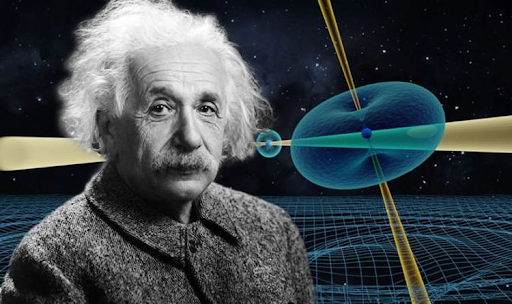
Einstein’s theory of special relativity, known for phenomena like time dilation and length contraction, now extends to fluid dynamics with a concept called "fluid thickening." Physicist Alessio Zaccone’s theory shows how viscosity behaves at relativistic speeds, blending relativistic equations with fluid dynamics to bridge classical and relativistic physics, possibly leading to a new fundamental law.
Zaccone’s model explains how viscosity changes with factors like temperature, particle size, and mass, and how it increases as fluids approach the speed of light. This is particularly relevant for hot fluids like quark-gluon plasma from the early universe.
The theory introduces "proper momentum," explaining how viscosity is affected by the relative motion of particles at high speeds. The model's predictions match experimental data, providing new insights into fluid behaviour across different conditions and expanding our understanding of relativity in fluid dynamics.
AI training method can drastically shorten time for calculations in quantum mechanics

In 2024, the Nobel Prizes in Physics and Chemistry were awarded to scientists using AI to advance their fields. At KAIST, Professor Yong-Hoon Kim and his team developed a groundbreaking AI method to speed up quantum mechanical simulations. These simulations are used to predict atomic-level chemical bonding, but they are usually very time-consuming and require powerful supercomputers.
The team created a model called DeepSCF, which bypasses complex steps by teaching AI to recognize chemical bonds in 3D space. By training the AI on organic molecules and adjusting their shapes, the model became faster and more accurate. This innovation could significantly speed up research in material science and drug design.
Professor Kim said, “We’ve developed a way for AI to understand chemical bonding, which will help accelerate material simulations in the future.”
Study finds optimal standing positions in airport smoking lounges

While many smoking rooms in U.S. airports have closed, they are still common in airports around the world. A study published in Physics of Fluids explored how ventilation affects smoke dispersion in these rooms, revealing that the position of smokers and the thermal environment play a significant role in how smoke particles settle.
Researchers from the University of Hormozgan in Iran simulated a smoking room using manikins to track nicotine particles. They found that smokers seated farther from ventilation inlets had less exposure to smoke. The airflow created by the ventilation system wasn’t uniform, so smokers in different areas experienced different levels of pollution. Body heat also attracted more particles, meaning that seated smokers absorbed more pollution.
The study suggests improvements to the room's ventilation, such as using a displacement system and placing exhaust vents on both the ceiling and walls. The researchers hope to go further by focusing on reducing smoke particles to protect both smokers and non-smokers in these spaces.
Successful experiment paves the way for discovery of a new element

The search for new elements aims to discover a stable variant that could last longer than just a few seconds without decaying. In nuclear physics, there's a theory about an "island of stability" for superheavy elements—an area in the periodic table where undiscovered elements might remain stable for longer periods. Researchers are focused on exploring the limits of atomic nucleus stability.
A study involving Lund University researchers in Sweden tested a new method to observe the element livermorium, which has 116 protons in its atomic nucleus. The study, published in Physical Review Letters, shows that the method is a promising step toward producing element 120, the heaviest element yet. The team was able to register a livermorium nucleus just eight days into the experiment, demonstrating their chosen settings worked well from the start.
The experiment, conducted at the Berkeley Lab in the U.S., involved the SHREC detector, designed and brought by the Lund team. This detector, containing 14 customised silicon wafers, helped track the fusion reaction products after a high-energy ion beam hit a target. The livermorium experiment will continue throughout the year, with plans to attempt producing element 120 in the coming years.


Comments